Introduction: The Hidden Drain on Your 2026 Recruitment Budget
The Problem: Indian organizations face a recruitment crisis. The cost of a bad hire now equals 2.5x annual salary when factoring in recruiter fees, onboarding, training, and lost productivity. External recruitment carries a 25% salary premium over internal promotions—and 46% of external hires fail within 18 months (Leadership IQ, 2024).
The Solution: Forward-thinking organizations are shifting from “hire-first” to “skill-first” mindsets using skills mapping. Instead of defaulting to external recruitment, they identify internal talent with adjacent skills and upskill them for new roles.
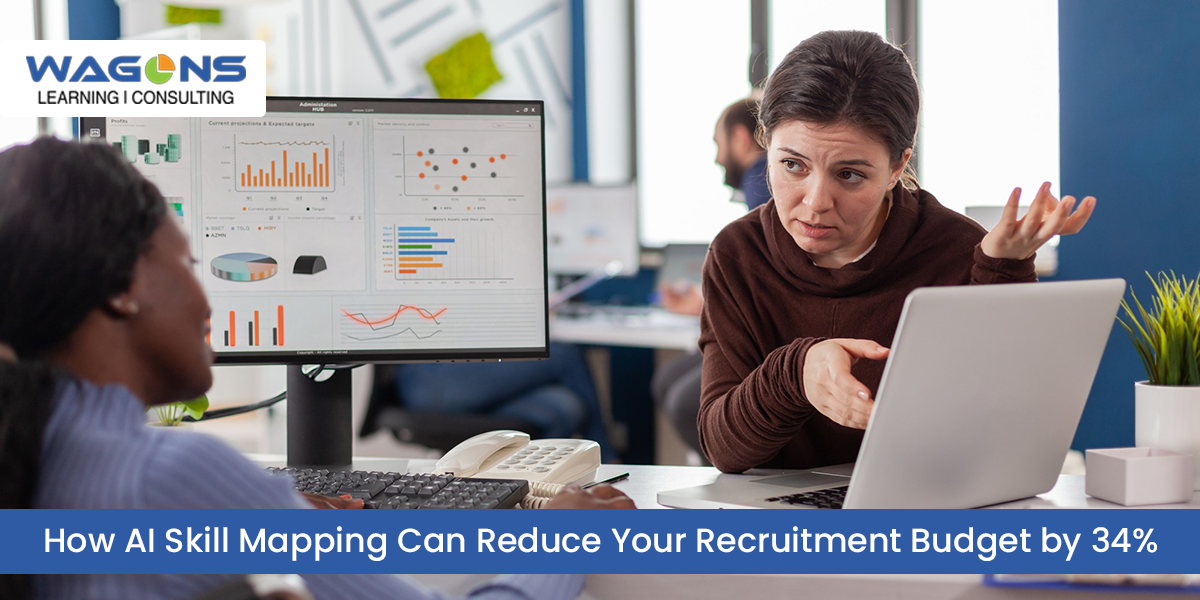
The Hook: Companies implementing AI skill mapping and internal mobility strategies reduce recruitment spend by 34% while simultaneously improving retention and time-to-productivity. This isn’t theory—it’s measurable ROI.
Why Traditional Hiring is Failing the Future-Ready Workforce
The Degree vs. Skill Debate
Resumes are becoming obsolete. A candidate with an MBA and impressive job titles tells you what they’ve been called, not what they can actually do. Skills-based hiring focuses on proven capabilities, not credentials.
Why this matters:
- 61% of HR leaders say job requirements are changing faster than they can hire (Gartner, 2024)
- Traditional screening misses internal candidates with transferable skills
- Degree-based hiring perpetuates bias and limits talent pools
Cost Analysis: The True Price of External Hiring
Recruiter fees: 15-25% of first-year salary for specialized roles
Onboarding time: 3-6 months before new hires reach full productivity
The “Ramp-up” tax: Projects delayed while new hires learn your systems, culture, and processes
Attrition risk: 46% of external hires fail within 18 months, restarting the entire cycle
Example calculation for hiring a Senior Data Scientist externally:
- Salary: ₹25 lakhs
- Recruiter fee (20%): ₹5 lakhs
- Onboarding/training: ₹3 lakhs
- 6-month productivity loss: ₹12.5 lakhs
- Total first-year cost: ₹45.5 lakhs
The Attrition Link
LinkedIn’s 2024 Workplace Learning Report found that 94% of employees would stay longer if companies invested in their career development. The irony? Organizations spend millions recruiting externally, while top talent leaves because they see no employee upskilling opportunities internally.
When employees watch companies hire externally for roles they could grow into, the message is clear: “We don’t invest in you.” The result is preventable attrition, driving even more recruitment costs.
What is AI Skill Mapping? (The Engine of Skill Intelligence)
Definition
Skills mapping moves beyond manual spreadsheets to a dynamic skill intelligence platform that continuously tracks workforce capabilities in real-time. Instead of asking “Who has this job title?”, organizations ask “Who has these specific skills?”
How It Works
AI skill mapping uses machine learning to:
- Analyze internal project histories and work products
- Identify skills demonstrated in actual work (not just claimed on resumes)
- Map adjacent skills showing who’s close to mastering new capabilities
- Create a real-time workforce skills gap analysis across the organization
The technology processes:
- Project participation data
- Performance reviews and manager assessments
- Completed training and certifications
- Skills self-assessments validated against work output
- Cross-functional collaboration patterns
The Benefit: Discovering Hidden Experts
Manual skill gap assessment misses critical insights. A developer who’s been doing infrastructure automation as 20% of their role won’t show up in a resume search for “DevOps Engineer”—but AI skill mapping identifies them as having 70% of the required DevOps skills with a clear 12-week upskilling path to full proficiency.
Hidden talent reveals:
- Employees with 60-80% of skills for open roles
- Transferable capabilities from adjacent domains
- High performers ready for stretch assignments
- Succession candidates’ leadership didn’t know existed
Step-by-Step: Conducting a Gap Analysis in Workforce Planning
Step 1: Identifying the North Star
Define the skills needed for a future-ready workforce aligned to your 2-3 year business strategy.
Questions to answer:
- Which capabilities will our digital transformation require?
- What skills do our strategic initiatives demand?
- Where is our industry heading technologically?
- What emerging roles will we need?
Step 2: Inventory
Run an automated skills mapping exercise across departments using your skill intelligence .
Data sources:
- Skills assessments and certifications
- Project participation and deliverables
- Manager evaluations of demonstrated capabilities
- Self-reported skills validated by work evidence
Step 3: The Gap
Identify the delta between current capabilities and business goals through gap analysis in workforce planning.
Analysis reveals:
- Critical skill shortages requiring immediate action
- Roles where no internal candidates exist
- Capabilities concentrated in a few people (succession risk)
- Skills are declining due to technology shifts
Step 4: The Roadmap
Create personalized employee upskilling pathways, bridging identified gaps.
Roadmap components:
- Individual development plans for high-potential employees
- Team-level upskilling initiatives
- Strategic external hiring for impossible-to-build skills
- Timeline and budget allocation for skill development
How Skill Intelligence Platforms Drive Recruitment Cost Reduction
Internal First Policy
Organizations using an internal mobility strategy fill 40% of open roles internally—roles that would have cost 25% salary premiums plus recruitment fees externally.
ROI calculation:
- 100 open positions annually
- 40 filled through internal mobility
- Average external hire cost: ₹5 lakhs (fees + premium)
- Savings: ₹2 crores annually
Reduced Time-to-Fill
Why is internal faster:
- No sourcing, screening, or interview marathons
- Known performers with proven culture fit
- Immediate start dates (no notice periods)
- Existing relationships and system knowledge
Time comparison:
- External hire for specialized role: 90-120 days
- Internal upskilling program: 45-60 days to productivity
Precision Benchmarking
When external hiring is necessary, AI skill mapping ensures 100% skill match by:
- Defining exact skill requirements (not just job descriptions)
- Assessing candidates against specific capabilities
- Identifying skill gaps in candidates upfront
- Making objective hiring decisions based on capability data
Result: Reduction in bad hires from 46% to under 15%, eliminating costly hiring mistakes.
Case Study: The 34% Saving Breakdown
Scenario: A mid-sized Indian technology firm needs 50 Cloud Architects to support AWS migration projects.
Traditional Route:
External recruitment costs:
- Average Cloud Architect salary: ₹28 lakhs
- Recruiter fees (20%): ₹5.6 lakhs per hire
- 50 hires x ₹5.6 lakhs = ₹2.8 crores in fees alone
- Salary premium (25%): ₹7 lakhs x 50 = ₹3.5 crores additional first-year cost
- Onboarding and ramp-up: ₹1.5 crores
- Total cost: ₹7.8 crores
The Wagons Way:
Using a skill intelligence platform for workforce skills gap analysis:
- Identified 30 internal developers with adjacent skills (Linux, networking, scripting)
- Designed a targeted 12-week AWS upskilling program
- Hired 20 external Cloud Architects (not 50)
Costs:
- 20 external hires: ₹3.12 crores (fees + premium + onboarding)
- Upskilling 30 internal candidates: ₹45 lakhs (training + certification)
- Internal promotions salary increase (15%): ₹1.26 crores
- Total cost: ₹4.83 crores
The Result:
- 34% recruitment cost reduction (₹2.97 crores saved)
- 0% attrition among upskilled group (vs. 46% industry average for external hires)
- Faster time-to-productivity (internal candidates already knew systems and culture)
- Increased employee engagement (career growth opportunities valued at ₹85 lakhs in retention savings)
Additional benefits:
- Built an internal AWS training capability for future needs
- Created career pathways, increasing retention
- Developed employer brand as an upskilling-focused organization
Making the Shift to Skills-Based Recruiting
The Competitive Advantage
Skill-led organizations outperform competitors by:
- Deploying talent 45% faster through internal mobility
- Reducing recruitment costs by 25-35% annually
- Improving retention through visible career development
- Building an adaptable, future-ready workforce capable of pivoting with market changes
The Urgency
India faces a talent crunch by 2027. NASSCOM projects a 30% skills gap in technology roles. Organizations still relying on external recruitment will face:
- Escalating salary wars for scarce talent
- Longer time-to-fill for critical positions
- Increased project delays from talent shortages
- Competitive disadvantage against skill-led organizations
Adopting gap analysis in workforce planning now positions you ahead of this crisis, building capabilities internally rather than competing for limited external talent.
Stop Guessing. Start Mapping. Is your recruitment budget leaking due to invisible skill gaps? Wagons Skill Intelligence Platform helps India’s leading organizations achieve 30%+ recruitment savings through a data-driven internal mobility strategy and targeted employee upskilling.
Analyze My Workforce Gaps Today
FAQ
How do I start workforce gap analysis for a team of 500+?
Use an automated skill intelligence platform that integrates with your HRIS and project management systems. Manual spreadsheets fail at scale—you need AI-powered skills mapping, analyzing actual work output to identify true capabilities and gaps.
Is upskilling always cheaper than hiring?
Not always. The ideal “Build vs. Buy” ratio is 60:40 (60% internal upskilling, 40% external hiring). Skills-based hiring externally makes sense for cutting-edge specializations or when time-to-competency exceeds 6 months. Employee upskilling wins for adjacent skills achievable in 8-16 weeks.
What are the best tools for AI skill mapping in 2026?
Modern skill gap assessment tools offer: integration with existing HR systems, AI-powered capability analysis (not just self-reporting), real-time skills dashboards, personalized upskilling recommendations, and internal mobility strategy matching engines connecting talent to opportunities.
How does internal mobility affect employee retention?
Employee upskilling and internal mobility increase retention 25-40%. LinkedIn data shows employees who move internally are 3.5x more likely to stay than those in static roles. Visible career growth through skills mapping directly increases “stay intent.”