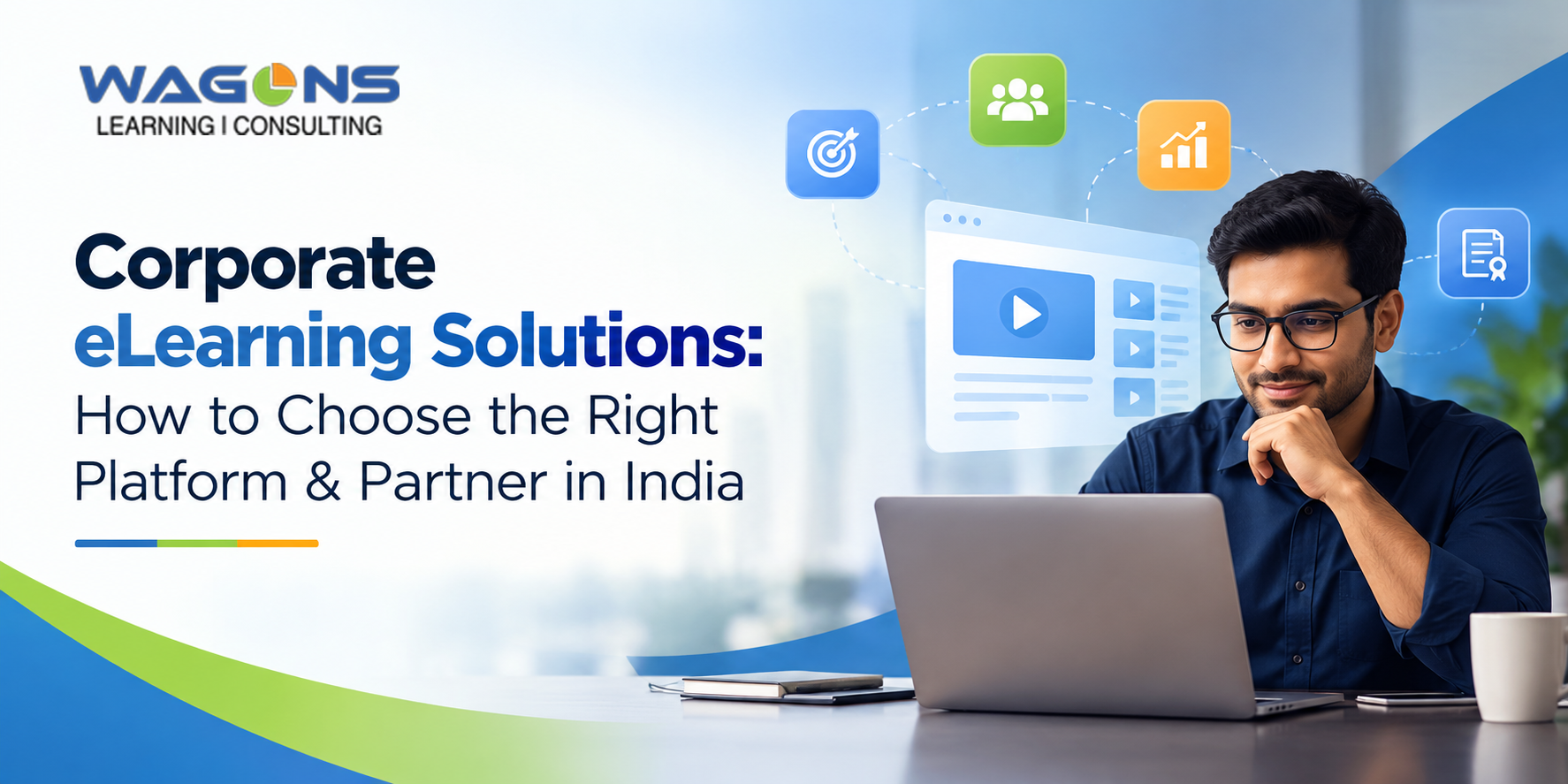
Enterprise learning and development is navigating a fundamental operational shift. Dispersed hybrid workforces, rapid tech cycles, and tight compliance mandates mean legacy classroom sessions and static slide decks no longer scale. Organizations with workforces spread across multiple metro hubs, manufacturing plants, and cross-border commercial offices in Dubai and the wider UAE need agile, measurable training delivery.
Deploying modern corporate elearning solutions is no longer just an alternative to physical workshops; it is the core engine driving operational capability, digital agility, and workforce compliance.
Yet, many enterprise L&D buyers face an expensive pitfall: investing heavily in generic, off-the-shelf course catalogs that fail to engage employees, address company-specific workflows, or provide actionable business analytics. High-impact enterprise training requires more than passive video hosting, it demands contextualized instructional architecture, mobile accessibility, and deep skill intelligence.
This comprehensive guide delivers an executive evaluation framework for selecting, building, and scaling corporate elearning solutions that cut L&D overhead and move business performance metrics.
Quick Summary: What Are Corporate eLearning Solutions?
Direct Definition: Corporate elearning solutions are comprehensive enterprise learning ecosystems comprising digital learning platforms (LMS/LXP), custom instructional content, authoring tools, and analytics dashboards designed to train, upskill, and certify employees across distributed business units. Unlike educational platforms, corporate solutions focus on operational standard operating procedures (SOPs), statutory compliance (such as DPDP and POSH), sales velocity, and leadership pipeline development.
What Distinguishes Top-Tier Enterprise eLearning from Off-the-Shelf Catalogs?
The primary reason corporate digital learning initiatives underperform is the “content mismatch.” Off-the-shelf subscription libraries offer thousands of courses, but almost none reflect an organization’s internal workflows, proprietary tools, or unique regulatory environment.
Off-the-Shelf Generic Libraries
- Generic theory and broad concepts
- Low completion rates (< 25%)
- Disconnected from internal business KPIs
- Rigid, difficult to modify or update
- English-only or Western-centric cases
Custom Corporate eLearning Solutions
- Workflows mapped to real enterprise SOPs
- High completion via contextual relevance
- Linked directly to operational ROI
- Modular micro-content updated in hours
- Multilingual localization (15+ dialects)
Modern enterprise elearning solutions succeed by pairing custom, scenario-based learning assets with integrated platform infrastructure that tracks real-time capability progression.
The 4 Core Architectural Pillars of Enterprise eLearning
A complete digital learning infrastructure requires four interconnected components operating in unison:
Corporate eLearning Architecture
- Pillar 1: Content Architecture (Custom & Micro)
- Pillar 2: Delivery Platform (LMS / LXP)
- Pillar 3: Data & Skill Analytics (Skill Intelligence)
- Pillar 4: Managed Training Ops (End-to-End SLAs)
1. Contextual Custom Content Architecture
Interactive, role-based modules built using modern instructional design principles (ADDIE/SAM models). This includes 2D/3D simulations, branching decision trees, microlearning bursts, and interactive video assets localized into native vernacular languages.
2. Modern Delivery Platforms (Enterprise LMS & LXP)
A high-performance Learning Management System (LMS) or Learning Experience Platform (LXP) that supports SCORM/xAPI/cmi5 standards, mobile responsive layouts, offline caching, and automated role-based enrollment workflows.
3. Integrated Skill Intelligence & Analytics
Real-time diagnostic dashboards that track more than mere course clicks. Modern analytics measure time-to-proficiency, assessment score distributions, skill gap closures, and team capability benchmarks mapped against industry standards.
4. Managed Operational Administration
The operational muscle required to manage platform hosting, user roster syncing, trainer logistics, help-desk queries, and regular content updates without burdening internal corporate HR teams.
Custom vs. Off-the-Shelf eLearning Solutions: Decision Matrix
Enterprises evaluating custom elearning solutions versus standard library subscriptions should assess their requirements across six key operational criteria:
| Evaluation Criteria | Off-the-Shelf Library Subscription | Custom Corporate eLearning Solutions |
| Workflow Specificity | Low; generic theoretical scenarios. | High; built around actual company tools, SOPs, and products. |
| Regulatory & Compliance Fit | Poor; usually built around US/UK law, missing DPDP/POSH/SEBI mandates. | 100% compliant with Indian statutory mandates and regional GCC standards. |
| Language & Regional Nuance | Almost exclusively standard English. | Localized across 15+ Indian regional languages and Arabic for UAE hubs. |
| Branding & User Experience | Generic third-party interface. | Fully white-labeled with company branding, guidelines, and tone of voice. |
| Learner Engagement & Completion | Typically low (15% to 25% voluntary completion). | High (75% to 90%+ completion driven by contextual relevance). |
| Cost Dynamics | Recurring perpetual per-user licensing fees. | One-time development cost with owned enterprise IP assets. |
Key Enterprise Use Cases for Digital Learning Solutions
Scalable digital learning solutions for business deliver maximum financial return when deployed across four high-stakes enterprise operational domains:
1. High-Velocity Employee Onboarding
Reducing time-to-productivity for new hires is a primary L&D priority. Digital onboarding tracks combine interactive company culture overviews, compliance certifications, and software sandboxes, compressing traditional 4-week classroom inductions into structured 10-day digital ramp-ups.
2. Statutory Regulatory Compliance (DPDP, POSH, Anti-Bribery)
Compliance training requires verifiable audit trails. By leveraging custom e-learning modules with mandatory randomized knowledge checks and automated digital certification, organizations insulate themselves against multi-crore statutory penalties under India’s DPDP Act and labor regulations.
3. Sales Enablement & Product Rollouts
Sales teams cannot afford to leave the field for multi-day workshops. Deploying mobile-first microlearning allows reps to review 90-second product comparisons, objection-handling audio bites, and pricing calculators directly on their smartphones minutes before client pitches.
4. Frontline & Plant Floor Technical Training
In manufacturing plants and retail networks, deskless workers lack desktop access. Interactive video SOPs accessible via floor-level QR codes deliver just-in-time machine calibration and safety instructions, directly driving down scrap rates and lost-time injuries (LTIs).
The 6-Stage Framework for Implementing Corporate eLearning
Deploying enterprise-grade digital learning requires a disciplined, step-by-step roadmap:
Stage 1: Diagnostic Capability Audit & Needs Analysis
Never digitize paper binders blindly. Conduct a training needs analysis (TNA) to identify the specific commercial friction point. Define clear success metrics: Are we aiming to reduce customer onboarding churn, lower assembly defect rates, or accelerate compliance certification speed?
Stage 2: Instructional Architecture & Storyboarding
Senior instructional designers translate raw company documentation and SME knowledge into interactive storyboards. Content is chunked into modular, bite-sized units using adult learning frameworks, real-world branching scenarios, and formative knowledge checks.
Stage 3: Rapid Prototyping & Media Authoring
Develop alpha prototypes utilizing modern authoring tools (Articulate Storyline, Rise, HTML5). High-impact visual assets, animated infographics, vernacular voiceovers, and scenario simulations are embedded and tested across diverse screen sizes.
Stage 4: Platform Integration & Technical Auditing
Upload and configure SCORM 1.2, SCORM 2004, or xAPI packages within the enterprise LMS. Verify multi-device responsiveness, single sign-on (SSO) authentication with company HRMS, tracking triggers, and offline data sync capabilities.
Stage 5: Phased Rollout & Change Management
Deploy the training through a pilot cohort of high-influence internal users. Gather qualitative feedback, calibrate quiz difficulties, and launch across regional business units with automated email nudges and managerial completion dashboards.
Stage 6: Business KPI Correlation & Ongoing Iteration
Track business metrics 30, 60, and 90 days post-launch. Compare operational performance metrics between trained and untrained cohorts to isolate the commercial impact of the learning intervention.
Frequently Asked Questions (FAQs)
What are corporate elearning solutions?
Corporate elearning solutions are integrated digital training systems that combine learning platforms (LMS), custom instructional courseware, microlearning modules, and analytics to train corporate workforces. They are designed to automate employee onboarding, ensure regulatory compliance, and upskill teams across distributed business locations.
How do custom elearning solutions differ from off-the-shelf courses?
Custom e-learning is built specifically around an organization’s proprietary systems, internal workflows, branding, and local regulatory mandates. Off-the-shelf courses provide generic, one-size-fits-all theoretical overviews that often fail to drive actual behavioral or operational change on the job.
What are the essential features of modern corporate elearning platforms?
A modern enterprise platform must support mobile-responsive design, offline access, SCORM/xAPI integration, automated role-based enrollment workflows, single sign-on (SSO) with enterprise HRMS, and comprehensive analytics tracking capability mastery rather than basic page clicks.
How does microlearning enhance corporate digital training?
Microlearning breaks complex topics into bite-sized (2 to 5 minute) learning nuggets focused on a single actionable objective. By delivering knowledge in the flow of daily work and using spaced repetition, it counters the Ebbinghaus Forgetting Curve and increases long-term knowledge retention by up to 80%.
How do organizations measure the ROI of corporate elearning solutions?
ROI is measured by tracking operational business KPIs before and after training deployment. Typical metrics include reduced new-hire onboarding ramp-up times, lower compliance non-conformance penalties, decreased customer support ticket volumes, and improved sales conversion rates.
What makes corporate elearning delivery unique in India and the UAE?
Enterprises in India and the UAE manage diverse, multilingual workforces spanning metropolitan corporate offices, industrial corridors, and expatriate business centers. Effective solutions must support high-volume vernacular localization (Hindi, Marathi, Tamil, Arabic), lightweight mobile delivery for variable bandwidth, and compliance with regional statutes like India’s DPDP Act and GCC labor frameworks.
Transform Your Enterprise Workforce with Wagons Learning
Scaling digital training across thousands of distributed employees should not burden internal HR teams with logistical headaches, clunky software, or high fixed overhead. High-impact enterprise training requires an agile, outcome-accountable partner that manages the entire learning ecosystem under one roof.
Wagons Learning delivers turnkey corporate elearning solutions engineered specifically for high-growth enterprises across India and expanding corporate corridors in Dubai and the UAE. Powered by our proprietary Skill Intelligence platform and comprehensive Managed Training Services (MTS), we design customized multilingual content, manage modern cloud LMS infrastructure, and deliver verifiable business outcomes that turn training into an engine of commercial growth.